


Mirzo Ulug‘bek
tumani, Mirzo Ulug‘bek shoh ko‘chasi, 25-uy


Mirzo Ulug‘bek
tumani, Mirzo Ulug‘bek shoh ko‘chasi, 25-uy



15Apr

Choosing a fence for a plot directly affects its appearance, safety, and service life. Corrugated board for fences remains one of the most popular solutions due to its affordability and practicality. However, it is important to correctly determine the material parameters so that the thickness and other characteristics match the operating conditions.
When choosing corrugated board, it is important to consider not only the appearance but also the technical parameters. Metal thickness directly affects the strength of the structure, and wave height determines the rigidity of the sheet and its resistance to loads. For fences, universal wall profiles are most often used, which combine reliability and cost-effectiveness.
In Tashkent’s conditions, wind loads and temperature fluctuations should be considered. Material that is too thin can deform, and excessively thick material will increase the budget without a significant need. Therefore, it is important to find a balance between cost and reliability.
When choosing corrugated board parameters, it is recommended to consider the following characteristics:
Properly selected parameters allow you to create a reliable fence that will last for many years without deformation. However, the protective coating remains an equally important factor, on which the appearance and resistance to the external environment depend.
The coating performs two functions at once: it protects the metal from external influences and shapes the appearance of the fence. There are several options on the market that differ in price, durability, and aesthetics. The choice depends on the budget and operational requirements.
In climatic conditions with active sun and dust, it is especially important to choose a coating that is resistant to fading and mechanical damage. A high-quality layer of polymers significantly extends the service life of the corrugated board and reduces the need for maintenance.
Among the most popular types of coatings are the following:

The choice of coating directly affects the appearance of the fence and its durability. Higher quality options require more investment but pay off due to a long service life. Therefore, it is important to consider not only the initial cost but also the long-term use.
When selecting corrugated board, it is important to consider several factors at once: operating conditions, budget, and appearance requirements. There is no universal solution, but standard wall profiles with a polymer coating are suitable for most private plots. This option provides an optimal price-quality ratio.
If you want to get a reliable and durable fence, you should choose products from trusted manufacturers. The Maxproduct company offers high-quality solutions for building fences (from 0.5 mm thick) that meet modern requirements and operating conditions.
 Читайте также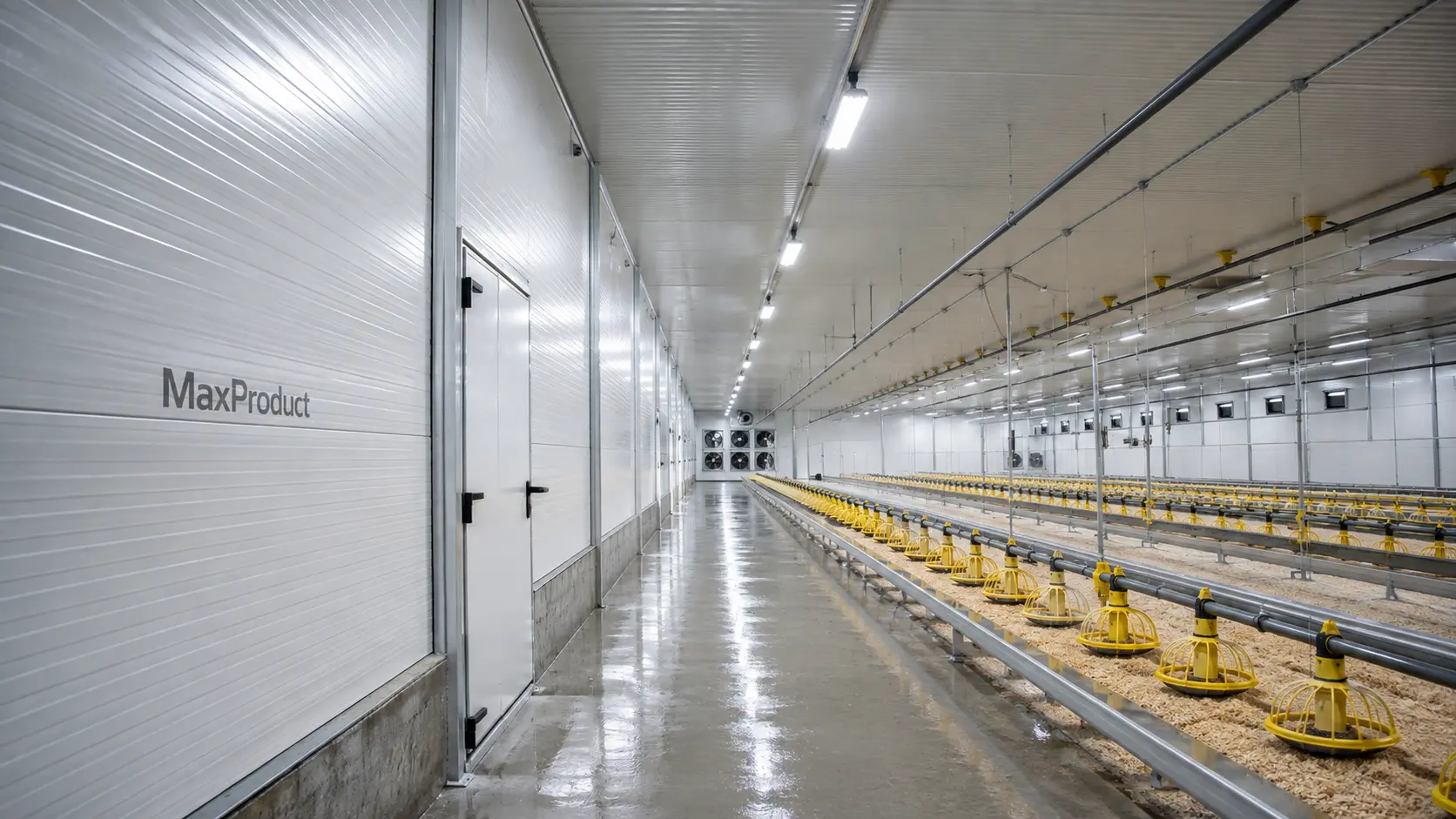
10Aug
When constructing facilities with an aggressive environment, higher requirements are placed on materials than for conventional buildings. In poultry and livestock complexes, structures are constantly in contact with moisture, organic fumes and detergents, and in industrial enterprises, chemicals and temperature fluctuations create additional stress. In such conditions, it is important to choose materials that retain […]
ПерейтиThe polymer coating protects the metal lining of sandwich panels from corrosion, mechanical influences and ultraviolet radiation. It is this element that determines how long the panels will retain their original appearance and perform their protective functions. However, the service life of the coating depends not only on its type, but also on the operating […]
Перейти
10Aug
10Aug
Uzbekistan belongs to the regions with increased seismic activity. Therefore, when designing buildings, special attention is paid to the ability of structures to withstand dynamic loads. In such conditions, not only the strength of individual materials is important, but also the operation of the building as a single system. Accordingly, when choosing a construction technology, […]
Перейти


