


Mirzo Ulug‘bek
tumani, Mirzo Ulug‘bek shoh ko‘chasi, 25-uy


Mirzo Ulug‘bek
tumani, Mirzo Ulug‘bek shoh ko‘chasi, 25-uy



25Feb

Modern logistics requires buildings that can be quickly built, easily adapted to businesses, and efficiently operated for many years. That is why prefabricated warehouses and hangars have become the standard for distribution centers and manufacturing companies. By using sandwich panels and designing prefabricated warehouses with logistics in mind, you can order the optimal solution from Maxproduct with predictable deadlines and costs.
The warehouse and transport infrastructure is constantly evolving, and the requirements for it are becoming stricter. Companies need premises with a large usable area, a controlled microclimate and the ability to scale. Prefabricated hangars meet these conditions and allow facilities to be launched without lengthy construction.
Such buildings are suitable for storing goods, picking up orders, and placing equipment. Frame technology gives freedom of layout, and lightweight enclosing structures do not overload the foundation. This is especially important for logistics complexes, where every square meter must work efficiently.
Multilayer panels have become the main material for enclosing structures in logistics due to their combination of strength and energy efficiency. They allow you to create a warm contour of the building and reduce operating costs. The key advantages include the following characteristics:
These properties make the panels a universal solution for logistics tasks of various scales.

The logistics facility construction process is clearly structured and can be planned. This reduces risks and allows you to control the budget at every stage. A typical construction cycle includes the following steps:
After completion of the work, the warehouse is ready to be equipped with racks and start operations.
The use of panels allows not only to speed up construction, but also to optimize costs in the long run. Reducing heat loss reduces heating and air conditioning costs. The ability to dismantle and expand makes such buildings a flexible tool for growing businesses.
It is important for logistics companies to respond quickly to market changes, and prefabricated warehouses fully meet this requirement. Cooperation with Maxproduct provides reliable materials and solutions designed for intensive operation in a modern warehouse complex.
 Читайте также
24Sep
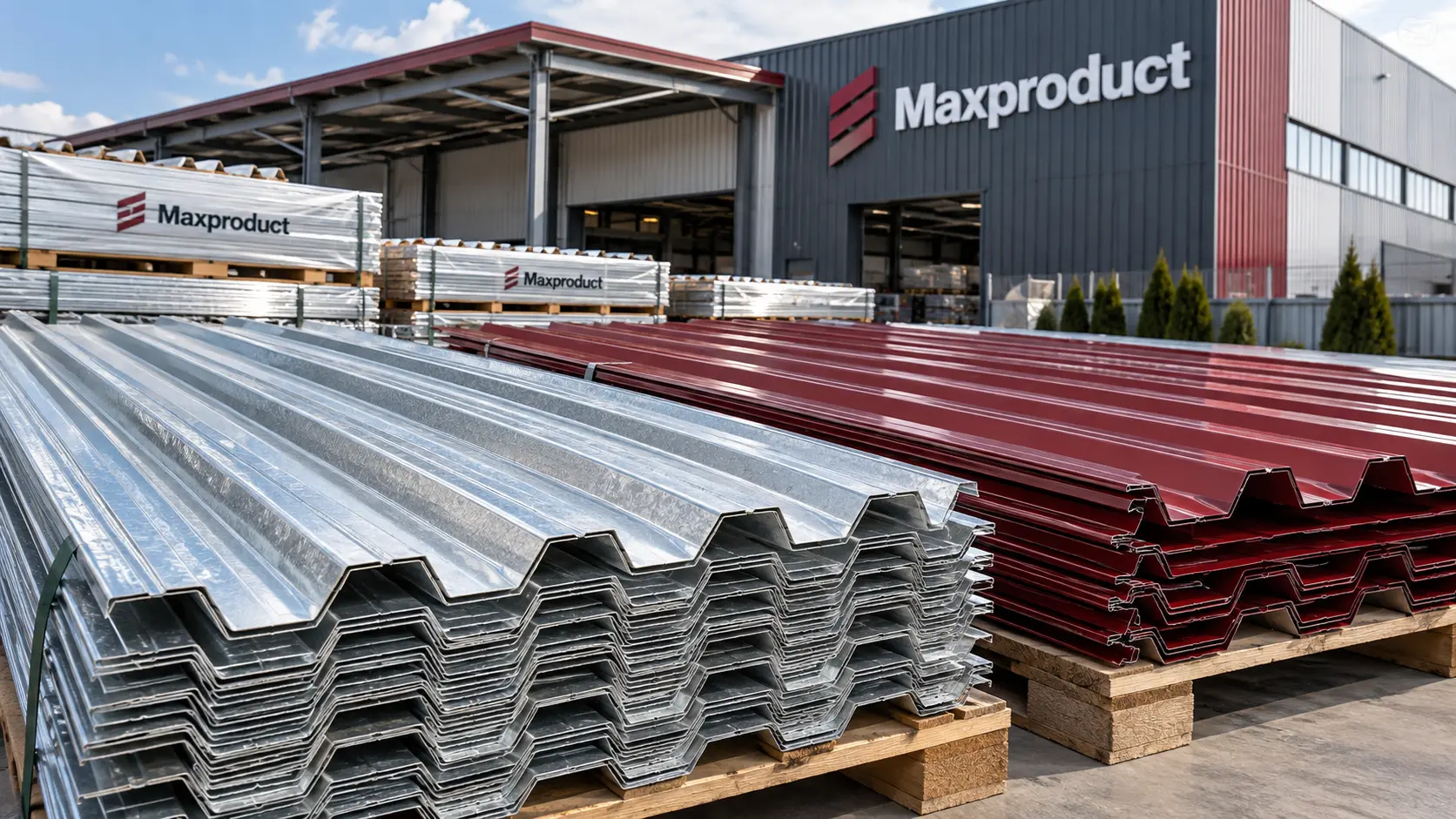
Профнастил выпускают с защитным цинковым слоем и дополнительным полимерным покрытием. Оба варианта имеют стальную основу и подходят для разных строительных задач, но отличаются устойчивостью к внешней среде, внешним видом и особенностями эксплуатации. Поэтому выбирать материал стоит с учетом места монтажа и требований к конструкции. В чем разница между покрытиями Оцинкованный профнастил представляет собой стальной лист, […]
ПерейтиCorrugated sheet metal is suitable for roofs with different structural and operational requirements. However, you shouldn’t rely solely on the appearance or price of the sheet: the rigidity, load‑bearing capacity, and service life of the roof depend on the thickness of the steel, the height of the profile, and the protective coating. The right choice […]
Перейти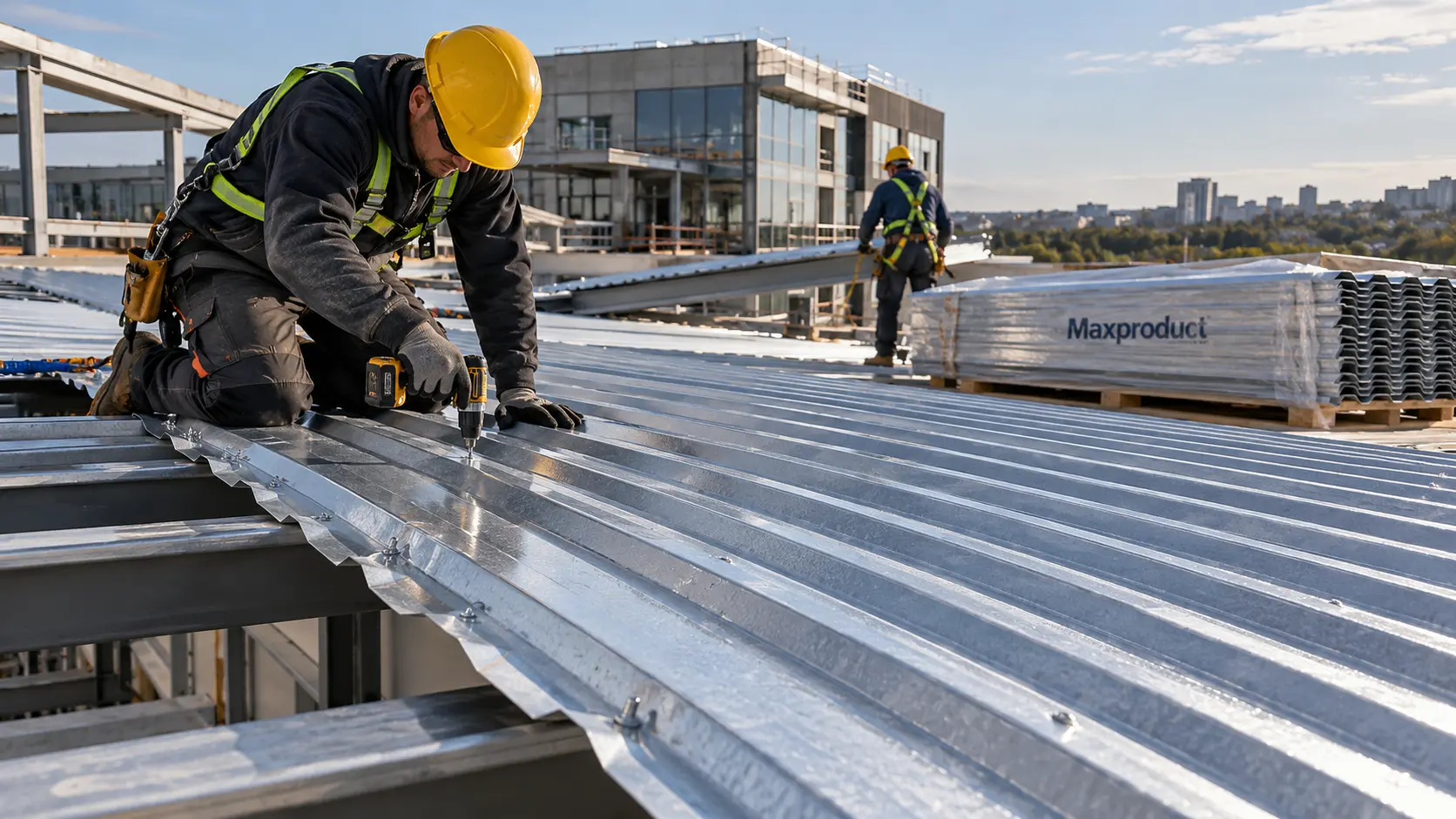
24Sep
24Sep
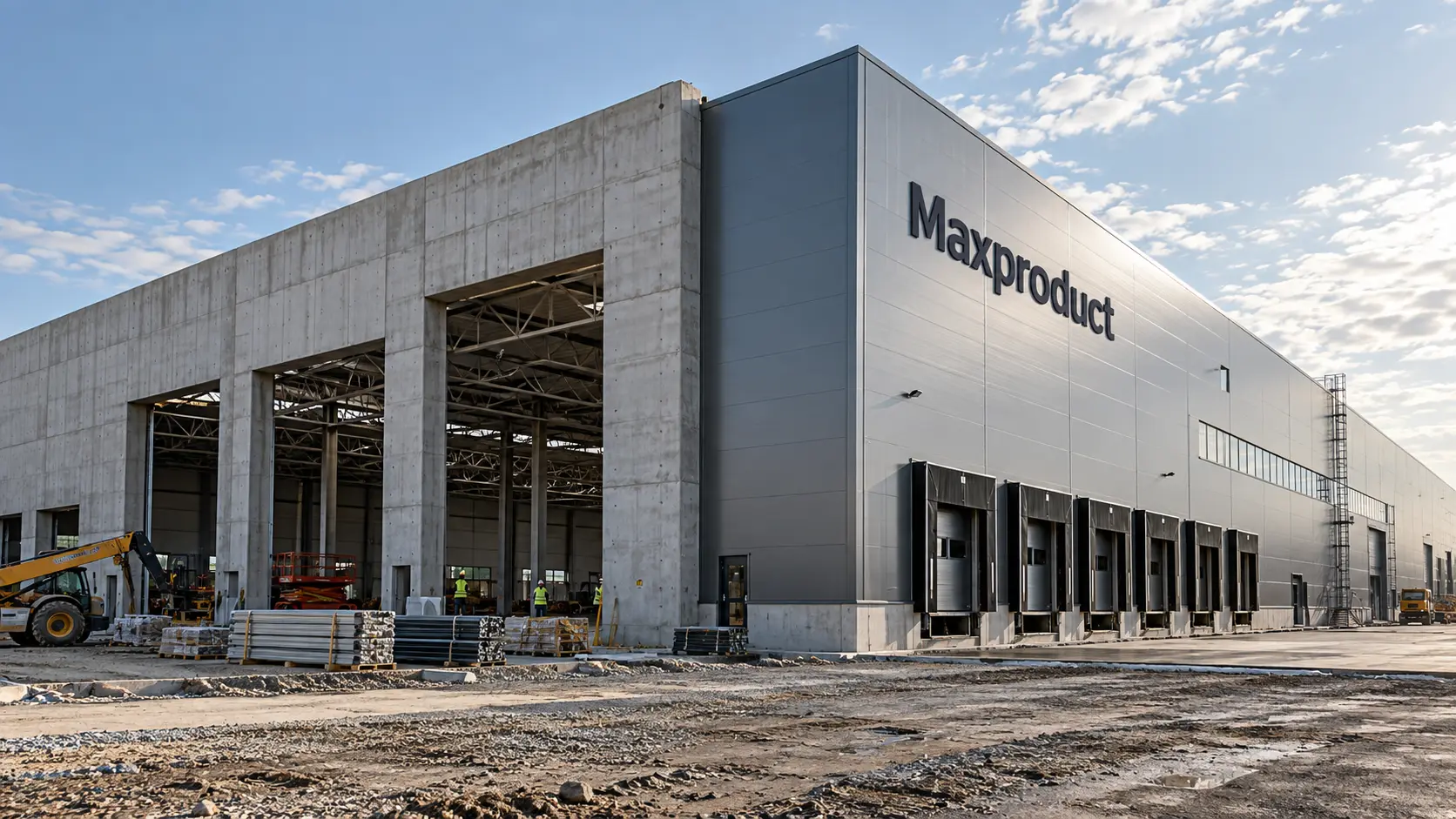
When constructing an industrial building, the walls must provide strength, thermal insulation, protection from the external environment, and ease of use. In practice, the choice often comes down to two solutions: concrete walls and sandwich panels. They should be compared based on construction time, load on the foundation, and operating conditions. h2 Concrete walls: advantages […]
Перейти


