


Mirzo Ulug‘bek
tumani, Mirzo Ulug‘bek shoh ko‘chasi, 25-uy


Mirzo Ulug‘bek
tumani, Mirzo Ulug‘bek shoh ko‘chasi, 25-uy



16Jun

Sandwich panel roofing is widely used in the construction of warehouses, production halls, shopping malls and other commercial facilities. This technology allows you to quickly obtain a reliable coating with high thermal insulation characteristics, however, the durability of the structure largely depends on the correct installation of each element.
Roofing sandwich panels are a multilayer material with metal linings and insulation inside. Due to their low weight and high strength, they can shorten the construction time and reduce the load on the building’s supporting structures.
Preparing the foundation before installing the roof
Before starting work, it is necessary to make sure that the bearing system is fully ready for the installation of panels. Even minor deviations in the geometry of the frame can lead to installation difficulties and leak-proof roofing. The following works are performed at the preparatory stage:
• Checking the geometry of the metal frame.
• Control of the level of purlins and load-bearing elements.
• Cleaning of surfaces from dirt and construction debris.
• Preparation of fasteners and seals.
• Checking the compliance of the slope with the design requirements.
After completing the preparatory measures, you can proceed to laying the roofing panels. Proper preparation of the substrate greatly simplifies further work and helps to avoid installation errors.
The main stages of installation of roofing sandwich panels
The installation of roofing panels is carried out consistently in compliance with the manufacturer’s technology. Special attention is paid to the correct location of the locking joints and sealing joints. The standard installation procedure includes several steps:
• Lifting panels onto the roof using lifting equipment.
• Laying of the first element with precise alignment to the design axes.
• Sequential installation of the following panels with the connection of locks.
• Fixing the panels with special self-tapping screws to the supporting structures.
Sealing of longitudinal and transverse joints.
Each panel must be securely fixed according to the design loads. A violation of the fastening scheme can lead to a decrease in the stability of the roof in strong winds or other external influences.
Nodes and elements affecting the tightness of the roof
Even high-quality roofing panels will not be able to provide the necessary protection for the building without proper design of the abutments and finishing elements. It is these areas that most often cause leaks when the installation technology is disrupted. Special attention should be paid to the following structural elements:
• Ridge nodes.
• Cornice overhangs.
• Places adjacent to walls.
• Engineering equipment installation sites.
• Drainage systems.
• Protective slats and slats.
High-quality sealing of the nodes allows you to preserve the thermal insulation properties of the roof and prevent moisture from entering the structure. This directly affects the service life of the entire building and reduces the cost of further maintenance.
Why it is important to follow the installation technology
Roofing sandwich panels combine the functions of a load-bearing coating, insulation and external weather protection. For this reason, any errors during installation can affect not only the appearance of the roof, but also its performance characteristics.
Proper installation ensures high tightness, reliable thermal insulation and structural resistance to loads. The use of high-quality roofing panels from Maxproduct and compliance with technological requirements make it possible to create a durable roof designed for long-term operation in various climatic conditions.
 Читайте также
24Sep
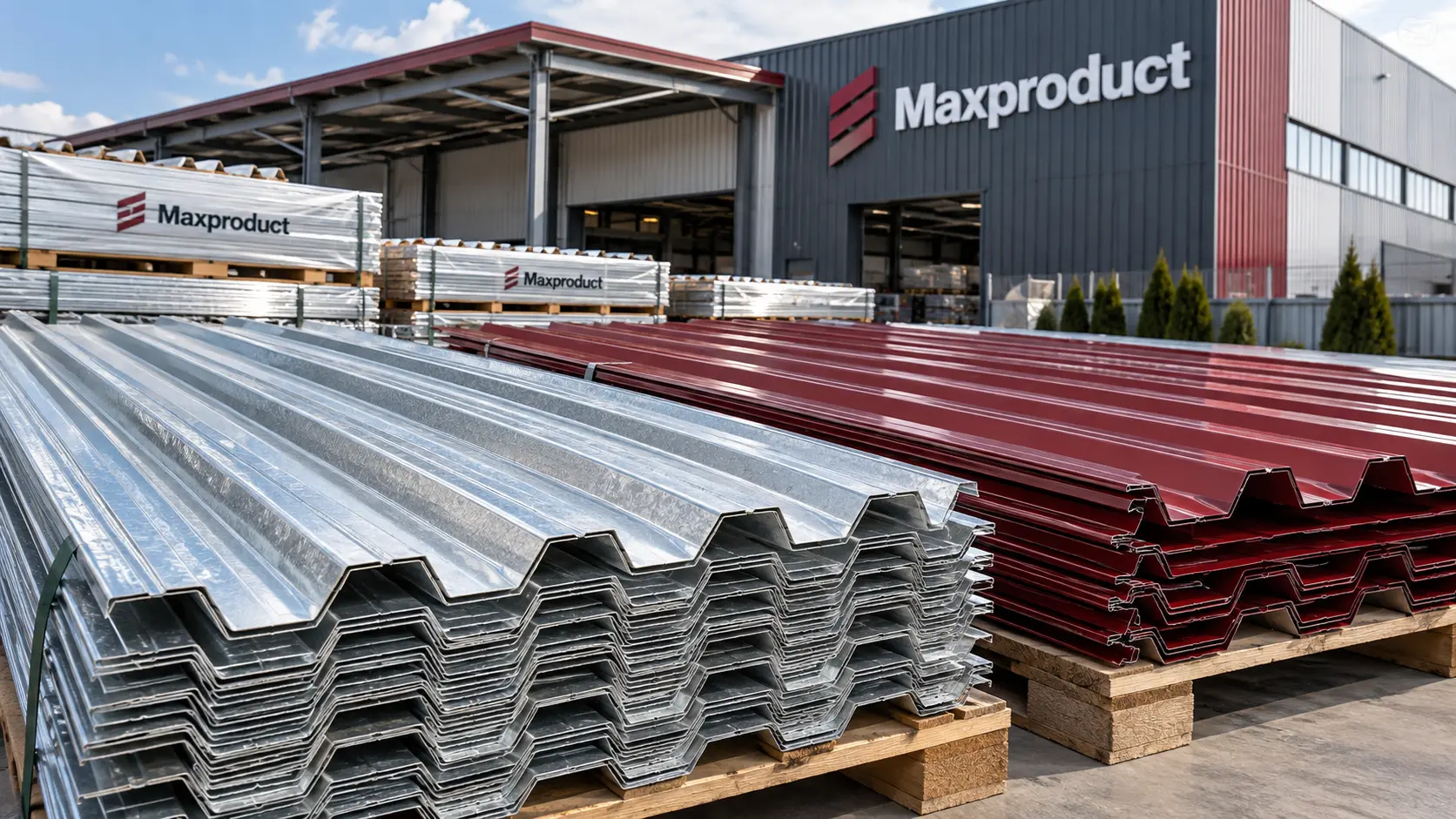
Профнастил выпускают с защитным цинковым слоем и дополнительным полимерным покрытием. Оба варианта имеют стальную основу и подходят для разных строительных задач, но отличаются устойчивостью к внешней среде, внешним видом и особенностями эксплуатации. Поэтому выбирать материал стоит с учетом места монтажа и требований к конструкции. В чем разница между покрытиями Оцинкованный профнастил представляет собой стальной лист, […]
ПерейтиCorrugated sheet metal is suitable for roofs with different structural and operational requirements. However, you shouldn’t rely solely on the appearance or price of the sheet: the rigidity, load‑bearing capacity, and service life of the roof depend on the thickness of the steel, the height of the profile, and the protective coating. The right choice […]
Перейти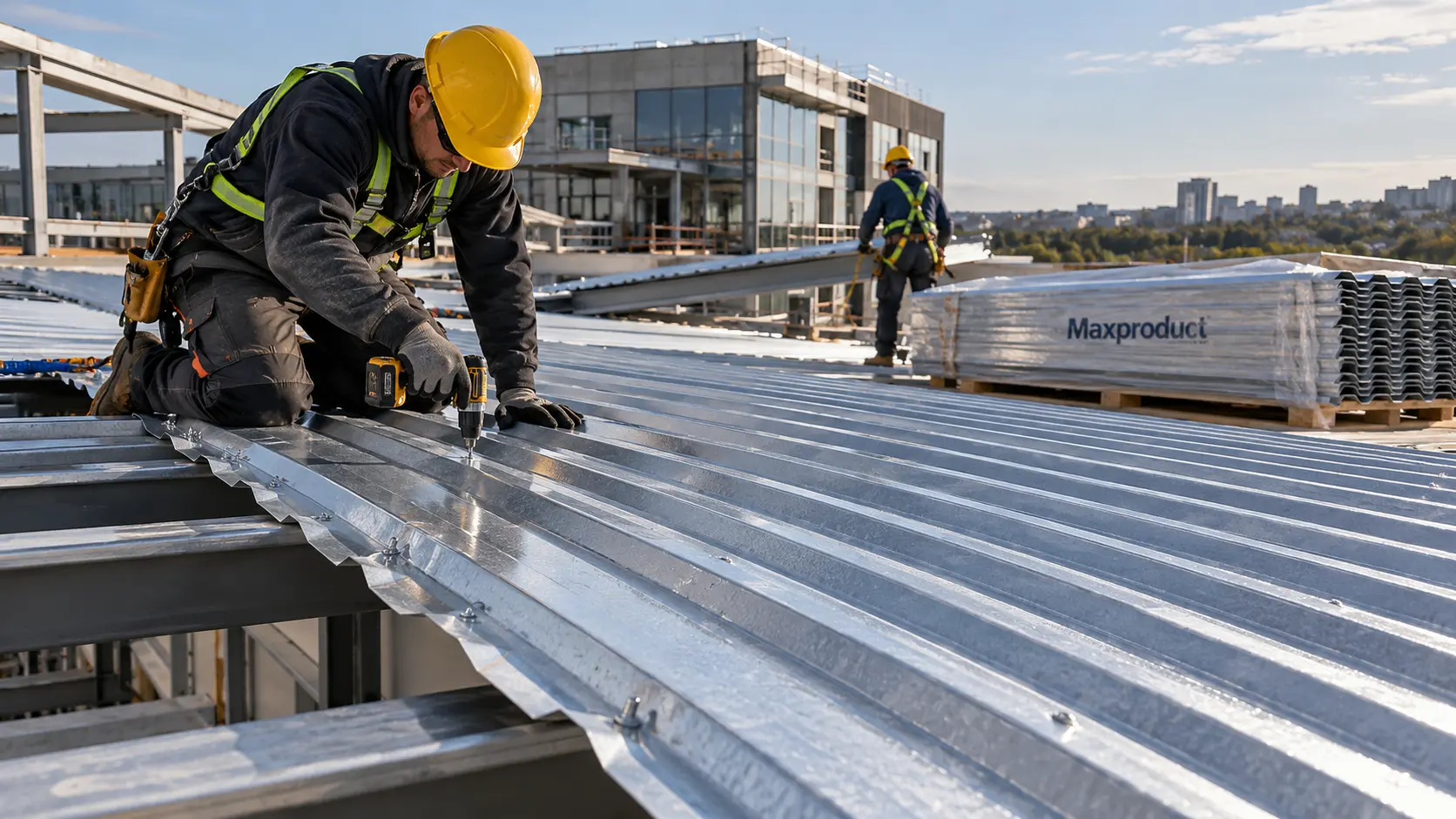
24Sep
24Sep
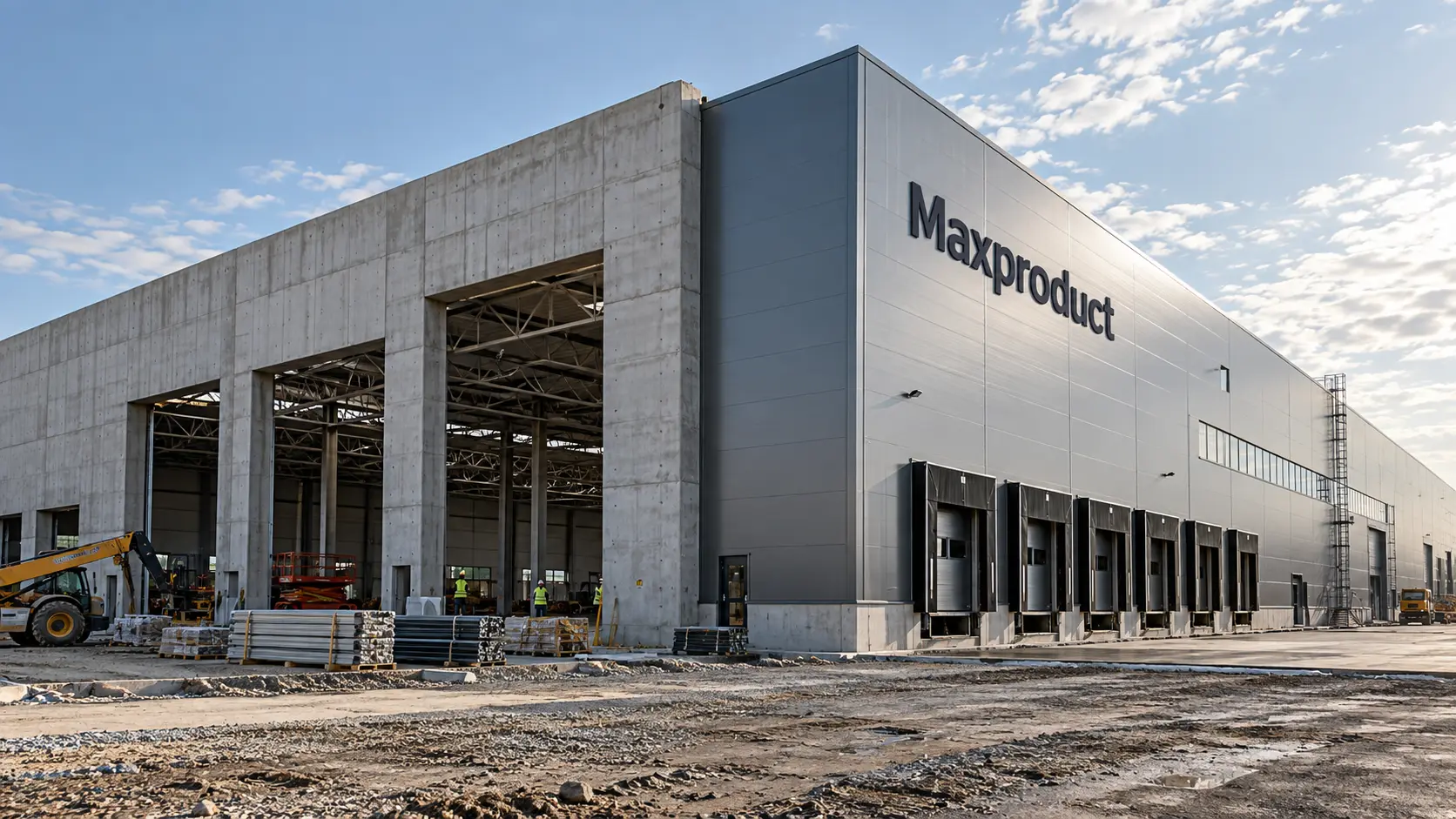
When constructing an industrial building, the walls must provide strength, thermal insulation, protection from the external environment, and ease of use. In practice, the choice often comes down to two solutions: concrete walls and sandwich panels. They should be compared based on construction time, load on the foundation, and operating conditions. h2 Concrete walls: advantages […]
Перейти


